
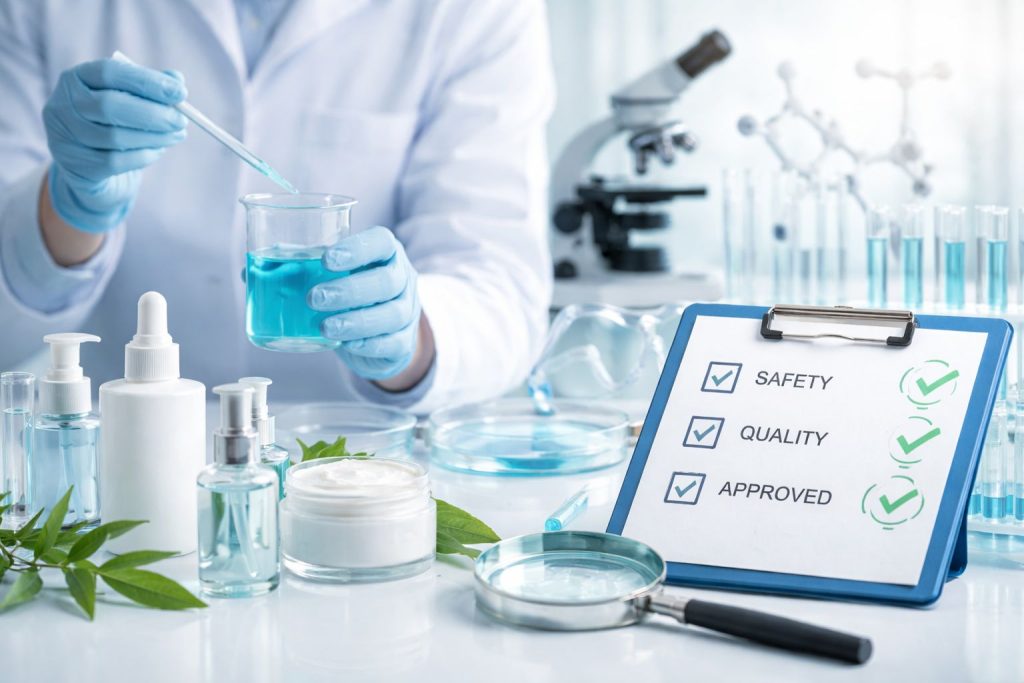
Skincare, Cosmetics & Dermatology Glossary
Multilingual reference for cosmetic ingredients, dermatological conditions, formulation terminology, and regulatory concepts with context, usage examples, and market-specific translations
Beyond Simple Translation: Cosmetics Safety Assessment Terminology
Understanding regulatory documentation requires more than dictionary lookups. When “emollient” appears in a safety assessment versus a marketing claim, the context shapes regulatory interpretation. When clinical corneometry substantiates “hydration” versus consumer self-assessment, the claim tier changes. This dermocosmetics terminology glossary maps those distinctions entry by entry.
How to Use This Glossary
Each entry includes:
- Multilingual cosmetic ingredient nomenclature for major cosmetics and personal care markets (EU, US, China, Japan, Korea)
- Context-specific usage examples: how terms appear in a Product Information File (PIF), claims, ingredient lists, labels, and safety assessments
- Regulatory references linking to applicable articles and Annexes of Regulation (EC) No 1223/2009, plus market-specific cosmetics regulations
- Related terms for comprehensive understanding of terminology relationships
Active Ingredients
Cosmetically active substances including humectants such as hyaluronic acid, emollients, antioxidants, exfoliants, and anti-aging actives, each with functional descriptions and regulatory status.
Dermatological Conditions
Skin conditions, concerns, and characteristics referenced in cosmetics claims and substantiation, from clinical terminology to consumer-facing descriptions of dryness, sensitivity, and fine lines.
Formulation Types
Product forms, textures, delivery systems, and application methods with technical descriptions and category classifications.
Manufacturing Processes
Production methods, quality control procedures, shelf life determination, and GMP terminology used in manufacturing documentation and process descriptions.
Regulatory Terms
European Union Regulation (EC) No 1223/2009 terminology, CPNP concepts, cosmetic products safety report language used by safety assessors, and compliance classifications.
Skin Anatomy & Physiology
Skin structure, layers, mucous membranes, cellular processes, and biological mechanisms referenced in safety assessments and mechanism of action descriptions.
A
C
E
Additional Glossary Categories
This is a representative sample. The complete glossary for cosmetics includes 500+ entries across all letters and categories:
- Preservatives: Parabens, phenoxyethanol, benzyl alcohol, formaldehyde releasers
- Surfactants: Anionic, cationic, amphoteric, non-ionic surfactants and their functions
- UV Filters: Physical vs chemical filters, approved substances, concentration limits
- Colorants: CI number system, permitted colorants per product category
- Product Forms: Emulsion types, anhydrous and essential oil based formulations, gels, foams, delivery systems
- Testing Methods: Patch testing, HRIPT, ocular and mucous membranes irritation, phototoxicity, stability testing
- Quality Control: Microbial limits, heavy metals, impurities, shelf life determination
Request Custom Glossary Development
Need a tailored glossary for your product portfolio, target markets, or therapeutic categories? We build custom multilingual glossaries covering cosmetics safety assessment terminology, brand-specific wording, and regulatory references, integrated into your localization workflows.
Quick Links
Official Regulatory Databases (Free)
Note:
US does NOT have a positive list like the EU. FDA provides: Prohibited & restricted ingredient lists Color additives database Generally Recognized as Safe (GRAS) substances
Industry Reference Databases (Some Free, Some Paid)
Meet the Expert
Viveta Gene, PhD
Head of Global Localization Solutions and Innovation
Post-doctoral Researcher: Prompt Engineering & LLM Terminology Accuracy
in regulated industries
PhD in Translation and New Technologies | Ionian University Adjunct Professor
GALA (Globalization and Localization Association) Board Member
With over 20 years of experience, with a specialization in regulatory translation for life sciences, Viveta bridges academic research and commercial localization strategy. As author of GALA’s industry-standard Machine Translation Post-Editing Protocol and an active researcher in AI-assisted terminology accuracy, she brings both scholarly rigor and practical expertise to every regulatory submission.
Ready to Expand Your Dermocosmetics Business Globally?
Partner with Intertranslations for regulatory-compliant, multilingual localization solutions backed by industry expertise and academic rigor.
ISO Certified Quality Standards
Our commitment to excellence is validated by international quality certifications.
ISO 17100:2015
Translation Services
ISO 9001:2015
Quality Management
ISO 27001:2013
Information Security