Meet the Expert
Bridging Regulatory Science and Global Localization Strategy
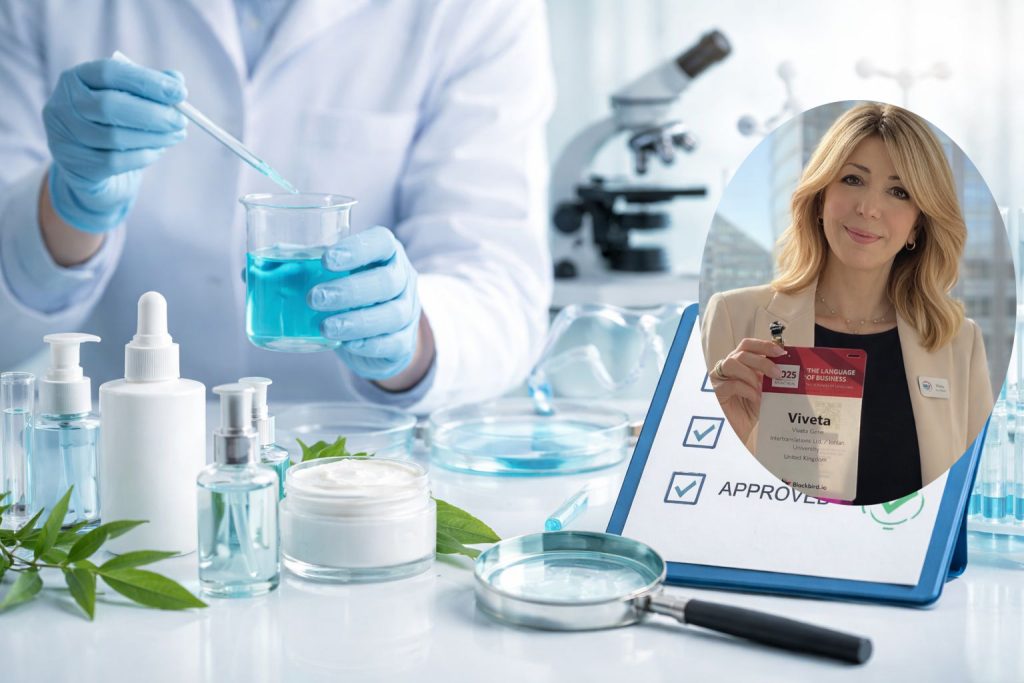
About Viveta Gene
PhD researcher and GALA Board Member driving innovation in compliance-driven translation for life sciences and regulated industries.
20+ Years Industry Experience | 50+ Markets Supported | 300+ Linguists Trained | 1500+ Life Sciences Experts Assisted
Dr. Viveta Gene is a translation technology specialist, researcher, and GALA Board Member with more than 20 years of experience across translation, language technology, project management, and multilingual workflow development.
Her work focuses on the intersection of regulatory translation, artificial intelligence, terminology management, and human expertise. She supports organizations operating in regulated environments where accurate translation depends not only on linguistic competence, but also on an understanding of the regulatory requirements governing the target market.
From Translation Research to Regulatory Innovation
My interest in regulated translation developed through a broader research question: how can translation technology improve efficiency without compromising domain accuracy?
That question became increasingly important when working with pharmaceutical, cosmetic, medical, and other specialist documentation. In these environments, a linguistically fluent translation can still fail if the translator misunderstands a specific term, applies inconsistent nomenclature, strengthens a regulated claim, or overlooks the relationship between documents.
After completing my PhD in Translation and New Technologies at Ionian University, I continued exploring the interaction between human translation expertise and emerging language technologies. Today, I lead Translation Solutions Innovation at Intertranslations while conducting postdoctoral research into AI-assisted translation, Knowledge Graph mediated workflows, prompt engineering, and terminology accuracy.
As a dermocosmetics regulatory localization specialist, I am particularly interested in workflows that connect linguistic decisions with ingredient nomenclature, claims, safety information, technical documentation, and market-specific compliance requirements.
Connecting Academic Research with Industry Practice
My research is designed around problems that translation teams encounter in professional environments.
Current work investigates how structured knowledge can improve AI-assisted translation when multilingual content contains specialized concepts, regulated vocabulary, or relationships that general-purpose language models may not interpret consistently.
A central strand of this work concerns AI terminology management regulatory translation methodologies. The objective is to examine whether Knowledge Graphs and other structured resources can reinforce terminology consistency across multiple languages while preserving the contextual relationships required for regulatory documentation.
This approach has direct implications for:
- Multilingual terminology management
- Regulatory submissions
- Automated quality assurance
- Translation memory design
- Cross-document consistency
- AI driven translation workflow development
- Controlled language resources
- Validation across target languages
Rather than replacing subject matter experts, these technologies can provide them with more structured information and stronger validation mechanisms during review.
GALA Leadership and MTPE Research
I currently serve on the Board of Directors of the Globalization and Localization Association (GALA), contributing to an international professional community focused on the development of the language industry.
My work with GALA also includes the MTPE Training SIG, an initiative created to address the need for more consistent training and quality expectations in machine translation post-editing.
Together with Lucía Guerrero, I co-developed work on a common MTPE training framework that brought together perspectives from translators, language service providers, clients, and academia. Our research was presented in the 2021 paper A Common Machine Translation Post-Editing Training Protocol by GALA.
The initiative examined a persistent industry challenge: organizations were adopting machine translation faster than they were developing shared expectations for post-editor competence, quality, effort, and workflow design.
Access the GALA MTPE Protocol
Research into Human and AI-Assisted Translation
My doctoral and postdoctoral work examines the relationship between professional translators and language technology rather than treating human and machine translation as competing models.
Research interests include:
- Machine translation post-editing
- Translator training and cognitive effort
- Large Language Models in specialist translation
- Knowledge Graph mediated translation
- Prompt engineering
- Terminology consistency
- Human validation of AI output
- Quality assurance for regulated multilingual content
The objective is to determine where technology genuinely improves the translation process and where specialist human judgment remains indispensable.
For regulatory content, high quality output requires both. Technology can identify patterns, support consistency, and perform rapid validation in real time. Experienced linguists and regulatory subject matter experts must still determine whether the resulting language accurately represents the source and remains appropriate for its intended regulatory context.
Academic and Professional Knowledge Transfer
Teaching and professional training form an important part of my work.
My academic activities explore how translation students and working linguists can integrate emerging technologies without losing the analytical skills required for specialist document translation. This includes developing a stronger understanding of how AI systems generate language, where errors originate, and why human validation remains essential.
My teaching and training interests include:
- Translation technology
- Scientific and technical translation
- Machine translation post-editing
- AI-assisted translation
- Specialist terminology
- Professional translation workflow design
This work connects academic research with the operational realities faced by translators, project managers, and language-service organizations.
Regulatory and Life Sciences Expertise
My professional work covers several areas in which linguistic decisions interact directly with technical or regulatory interpretation.
Dermocosmetics and Skincare
Projects may involve Product Information Files, cosmetic safety documentation, ingredient declarations, product labels, claims, and market-entry materials.
The challenge is not simply translating content into multiple languages. Ingredient nomenclature, claims, warnings, and product descriptions must remain consistent throughout the documentation set and appropriate for the relevant target markets.
Pharmaceutical and Life Sciences
My experience also includes clinical trials, safety-related documentation, medical-device content, Instructions for Use, Quality Management System materials, and other regulated technical documentation.
This combination of language technology and domain experience has shaped my work as a pharmaceutical cosmetics translation expert, particularly where scientific precision and multilingual communication intersect.
Translation Technology and Process Design
I work with organizations to evaluate how CAT tools, translation memory, terminology databases, automated checks, Knowledge Graphs, and AI systems can support more controlled multilingual workflows.
The objective is not technology adoption for its own sake. Each tool must solve a defined translation or quality problem and integrate into an accountable human review process.
Supporting International Regulatory Workflows
Regulated multilingual projects frequently involve several document types, target languages, reviewers, and approval stages.
Effective project management therefore requires coordination between translators, regulatory specialists, technical teams, and client stakeholders. Approved terminology must remain consistent across documents, while changes to source information should propagate through the relevant multilingual assets without creating conflicting versions.
My approach combines:
- Controlled linguistic resources
- Domain-aware translator selection
- Translation memory governance
- Cross-document validation
- Specialist regulatory review
- AI-assisted quality controls
- Structured change management
The aim is to create a scalable translation workflow in which technology strengthens human expertise rather than obscuring responsibility for final decisions.
Industries and Specialist Domains
My experience spans:
- Dermocosmetics and clinical skincare
- Pharmaceutical and life sciences
- Medical devices and diagnostics
- Regulatory and compliance documentation
- B2B technology and SaaS
- Fintech
- Gaming and digital content
Across these fields, the central principle remains consistent: professional multilingual communication depends on combining linguistic competence with an understanding of the subject matter, intended audience, and operational context.
Qualifications and Professional Leadership
Academic and Research
- PhD in Translation and New Technologies, Ionian University
- Postdoctoral research in AI-assisted and Knowledge Graph mediated translation
- Research into prompt engineering, MTPE, and specialist terminology
Industry Leadership
- GALA Board of Directors
- Founder of the GALA MTPE Training SIG
- Head of Translation Solutions Innovation at Intertranslations
- More than 20 years of translation and localization industry experience
Core Expertise
- Regulatory translation
- Translation technology
- Terminology management
- Machine translation post-editing
- AI-assisted translation
- Multilingual quality assurance
- Specialist translation workflow design
My work ultimately focuses on one question: how can organizations use language technology intelligently while preserving the specialist knowledge required for reliable multilingual communication?
In regulated industries, the answer depends on combining research, technology, linguistic expertise, and domain knowledge within a controlled process that keeps human accountability at its center.
Implementation Checklist: Document Classification System
Getting Started:
Whether you’re navigating CPNP submissions, scaling to new regulatory markets, or seeking to optimize your compliance documentation workflows, I welcome the opportunity to explore how specialized localization expertise can accelerate your goals.
FILL IN THE FORM TO ACCESS THE FILE
Ready to Expand Your Dermocosmetics Business Globally?
Partner with Intertranslations for regulatory-compliant, multilingual localization solutions backed by industry expertise and academic rigor.
ISO Certified Quality Standards
Our commitment to excellence is validated by international quality certifications.
ISO 17100:2015
Translation Services
ISO 9001:2015
Quality Management
ISO 27001:2013
Information Security